
Blog
New Year, New Habits!
Welcome to 2023!
The new year is just a little over a week old. How are you tending to the habits you desired to create this year? Please welcome my colleague, Lindsey Bass, as a guest blogger. Over the next few posts, she will share thoughts gleaned from the book Atomic Habits by James Clear.
Dr. Andy Brown
Fit as a Fiddle Leaf Fig
Meet Amy
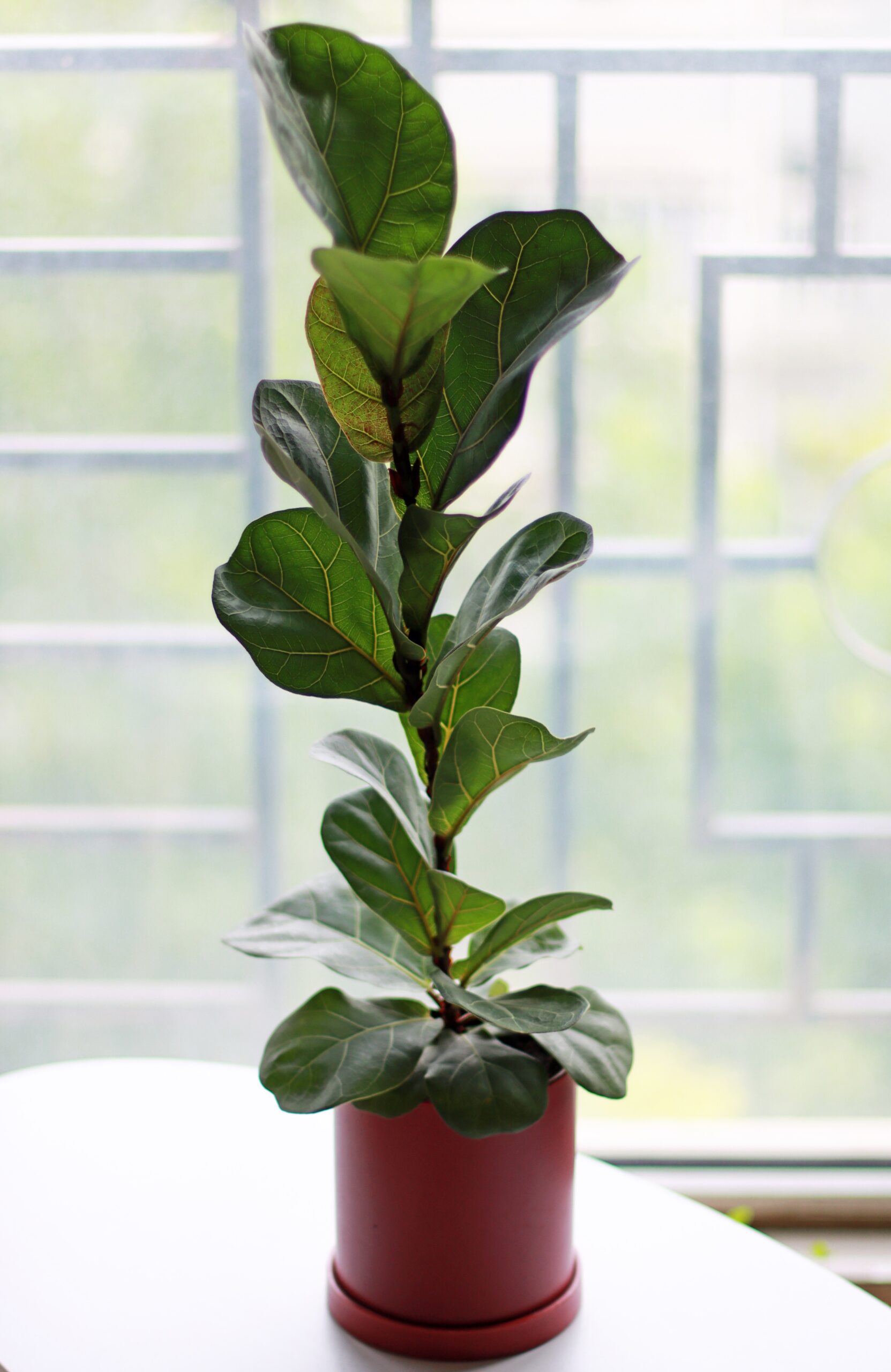
Amy was standing in the center aisle of the nursery with rolling lush greens and warm tones surrounding her. Her hesitancy and uncertainty seemed to filter away like the sun through the canopy. Amy is a lady who had little to no experience caring for houseplants. However, she desired to be an indoor gardening enthusiast with thriving houseplants – especially the aesthetically popular Fiddle Leaf Fig. According to Feng Shui principles, Fiddle Leaf Figs attract positive and nourishing energies. Amy was all for that. To top it off, the overall shape of the Fiddle Leaf Fig with its large and round leaves works, in this theory, to neutralize negative energy and “poison arrows” from the sharp corners of a home (my broken toe sure knows a thing or two about those poison arrow corners). That type of energy is precisely the boost Amy felt she needed to bring hope, encouragement, and an optimistic take on her livelihood – maybe we all could use a little bit of that right now.
The Fiddle Leaf Fig makes its presence known in a home or an office when its environment is curated for success. Like the Fiddle Leaf Fig, humans have trouble being forcefully moved out of an environment we have been acclimated to. Especially one we have developed plenty of little habits around. Looking through the eyes of a nurturing caretaker, Amy meticulously scoured her home to find what would help her thrive and what was making it harder to grow.
Take Time to Notice
While Amy was searching for information about curating the environment for her plant, she noticed something quite beguiling. She paused and looked around her space at the amount of sunlight coming from her west-facing window and exhaled deeply. It is not really about the Fiddle Leaf Fig – it is about becoming the kind of person that she wants to be. Not a lackluster goal, but rather, an intention. Noticing the things that seemingly have a microminiature impact on her awareness, Amy intends to see beyond the obvious things. Noticing these points in life is the first step in understanding whether the environment is helping or hurting.
The act of noticing involves your senses, and the most powerful of all is vision, allowing our behavior to become an impetus toward our goals (Clear, 2018). Pausing and setting intentions while looking around helps make minor adjustments in what you see, leading to magnificent changes in your actions. There is no doubt about it; change is hard. There are, however, tools that can help make habits in life easier to adjust and hold on to.
Amy noticed that habits in her life could better serve her aspirations for personal growth. She found a book and, looking out her west-facing window, began reading about atomic habits.
Small Changes, Big Results
Small changes, minor adjustments, acute rearrangements – however you want to describe it – is what Amy is reading about, Atomic Habits. The book breaks down information you might already know and have probably heard in different places and applies it to actionable steps within attainable “laws.”
Following the ideas of Atomic Habits’ laws, the first is to make it obvious (Clear, 2018). In our story, Amy decides it is setting her Fiddle Leaf Fig plant right next to the window at the bottom of the stairs. When she walks down the stairs (cue + location) in the morning (time), she has the desire to see a thriving plant (craving), and in turn, she checks the soil and determines that there is a need to water the plant (response). When doing this, Amy sees herself as actively caring for and nurturing her precious plant – this is comforting (reward). One habit shift of walking down the stairs and checking the soil is considered a 1% improvement in the daily routine (Clear, 2018). Some habits like this might seem too small to matter, yet, that tiny step makes that plant avoid the stress of water neglect, which is what Amy needs to feel fulfilled as the indoor plant enthusiast she is. She acknowledges a need for consistency and tender care with predictability in the environment, all keys to shaping the lifestyle she wishes for (Clear, 2018).
Having hope increases motivation and can also positively impact the outcomes of stress in our lives (Booker et al., 2021). These past few years have seemed like vacuums for hope, but maybe we can reverse that switch and generate new relationships with our environment. Notice our surroundings are not filled with objects, material things that serve bad habits, but rather, relationships swelling around us – longing to see you thriving. When Amy is thriving, so is her Fiddle Leaf Fig because BOTH of their needs are being met with what they have in an environment designed with care and consideration to create Amy, the indoor plant enthusiast.
“Every day of our lives, we are on the verge of making those slight changes that would make all the difference.”
– Mignon McLaughlin
References
Clear, J. (2018). Atomic Habits: An Easy and Proven Way to Build Good Habits and Break Bad Ones. Penguin Publishing Group.
Booker, J.A., Dunsmore, J.C., & Fivush, R. (2021). Adjustment factors of attachment, hope, and motivation in emerging adult wellbeing. Journal of Happiness Studies, 22, 3259-3284. https://doi.org/10.1007/s10902-021-00366-5
Environment Matters More (Over Motivation)
- Habit scorecard – write down current habits to become more aware of them.
- Implementation intention – I will (behavior) at (time) in (location)
- Habit stacking- after (current habit), I will (new habit)
- Environment Design – cues of good habits – make them obvious and visible
- Bad habits? – Make it invisible -reduce exposure – remove cues of bad habits
Lindsey is a new professional in the counseling field who is conditionally licensed in Maine and is
a National Certified Counselor and a Certified Animal Assisted Therapy Professional. She currently works doing equine assisted psychotherapy as well as providing tele mental health services. Populations of particular interest to Lindsey include military children and families, new mothers, and those who have endured traumatic birth experiences. Lindsey is embedded in the submarine military community herself and is also a mother to a three-year-old and fur parent to two Shiba Inus.